
by BananaCrapshoot
Hello Troopers! Welcome back, today my goal for this article is to talk abou deck archetypes, what they are and what we could see in the first set of Star Wars: Unlimited. I will also make some guesses based on that based on cards revealed so far. I hope this is a fun exercise and a place potential new tcg players can learn about archetypes typically found in card games. There are three main Archtypes Aggro, Midrange, and Control, each with some subtypes and a few more minor archtypes that overlap on the Venn Diagram of deckbuilds.
Aggro
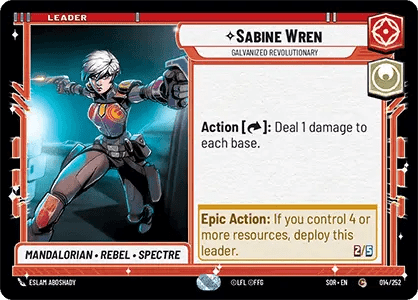
Starting off we will go over Aggro decks. Aggro is short for Aggression and typically the gameplan is to win the game as fast as possible instead of some long game plan. Using units with ways to attack the turn they are played or a way to get extra attacks for units is another way to get that aggressive deck. In Star Wars:Unlimited (SWU) this may look like building a deck full of cheap units to overwhelm one arena and get lots of damage to the base super fast. Typically aggro decks are very consistent and are favored in the beginning of formats. I also wanted to throw out another version of Aggro is Burn. Burn decks revolve around direct damage abilities. In SWU cards that deal direct damage to the base or ways of dealing damage out of hand or from Abilities other than attacking with a unit would be Burn. Sabine Leader and For a Cause I Believe In are two cards we have seen so far that fit the Aggro mold.
Midrange
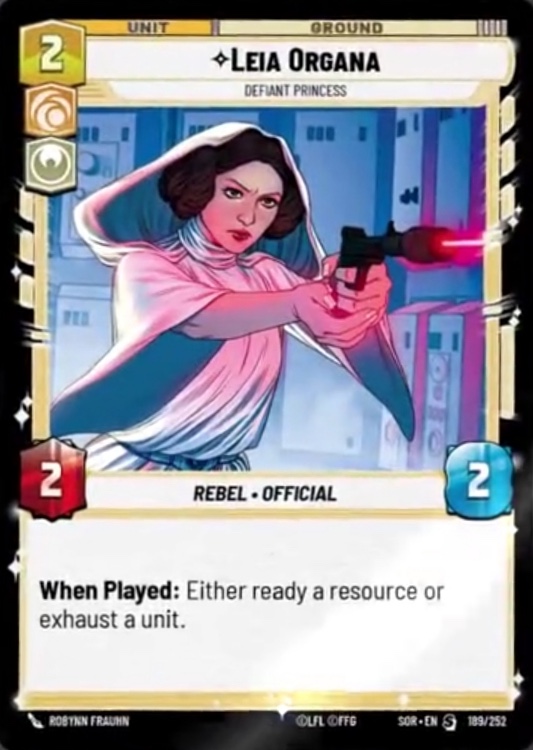
Generally Midrange decks have some early curve control options and build a board and win in the mid to late game more aggressively. You will see some smaller units for some presence but early removal is common then it switches and becomes more of an aggro deck late. These decks are a little more flexible able to play a control game v Aggro decks and play more Aggro v Control decks. In SWU a card like Leia would fit nicely into midrange as it could give you some control or tempo.
Control
Next I wanna tackle the third of the most common archetypes found in card games, Control. Control decks like to slow the game down. Control decks like to gain card advantages, play board wipes, protect their own units, and disrupt opponent synergies. Control decks want to react to and neutralize what your opponent is doing and win through war of attrition. But how does control win? They either look for a late game aggro style with some boss monster units, or alternate win condition either some combo build or a mill win condition. Mill is a control subtype with the goal of making your opponent discard cards from their deck or hand to limit their ability to effectively play the game. In some games once your deck is empty and you go to draw from it you lose the game to mill. In games like hearthstone you take fatigue damage for every card you go to draw but can’t.
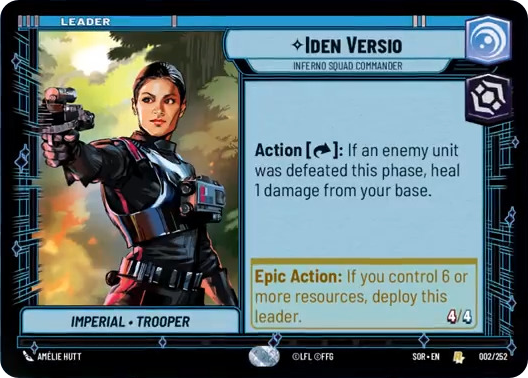
The Iden Versio leader card appears to fit nicely into a control deck as it’s goal of healing your base will allow them to slow the game down and live much longer into the late game, helping to neutralize an aggro approach.
Another archetype found in card games is Combo decks. Combo decks rely on two or more card combinations to win the game or create a board state leading to victory. Combo decks need to the ability to draw into and play the combo consistently, be able to withstand disruption from control decks and they need to be fast enough you can win vs aggro decks. This looks different in various card games so I can’t really say if any of the cards we have seen will lead to a combo deck. Also the turn structure of SWU will help limit the volatility of combo decks.
There’s a lot of options within archetypes and their subtypes and decks can have crossover.
You can combine aggro and control, aggro and combo, control and combo
One hybrid deck example is a Tempo deck, which is an aggro-control hybrid style. With Tempo you look to gain an advantage early and control the board from there instead of slowly lulling the game down, controlling and winning late. Tempo looks to gain advantages from the beginning and stay consistent throughout the game. Tempo decks can gain the advantages through resources or board states. Then disrupt or control the opponents board along the way.
That is it for this one. I hope this article can help some new players to tcg get a handle on some Deckbuilding strategies and archtypes we will see in SWU. Thanks for stopping by and we will see you in the Arenas!

 Space Area Ground Arena a Star Wars:Unlimited podcast
Leave a comment